
Love at First Sight
From Scratch "Messiahs" to Christmas Oratorios squeezed into student apartments, nothing sparks joy quite like an unrehearsed DIY take on the classics

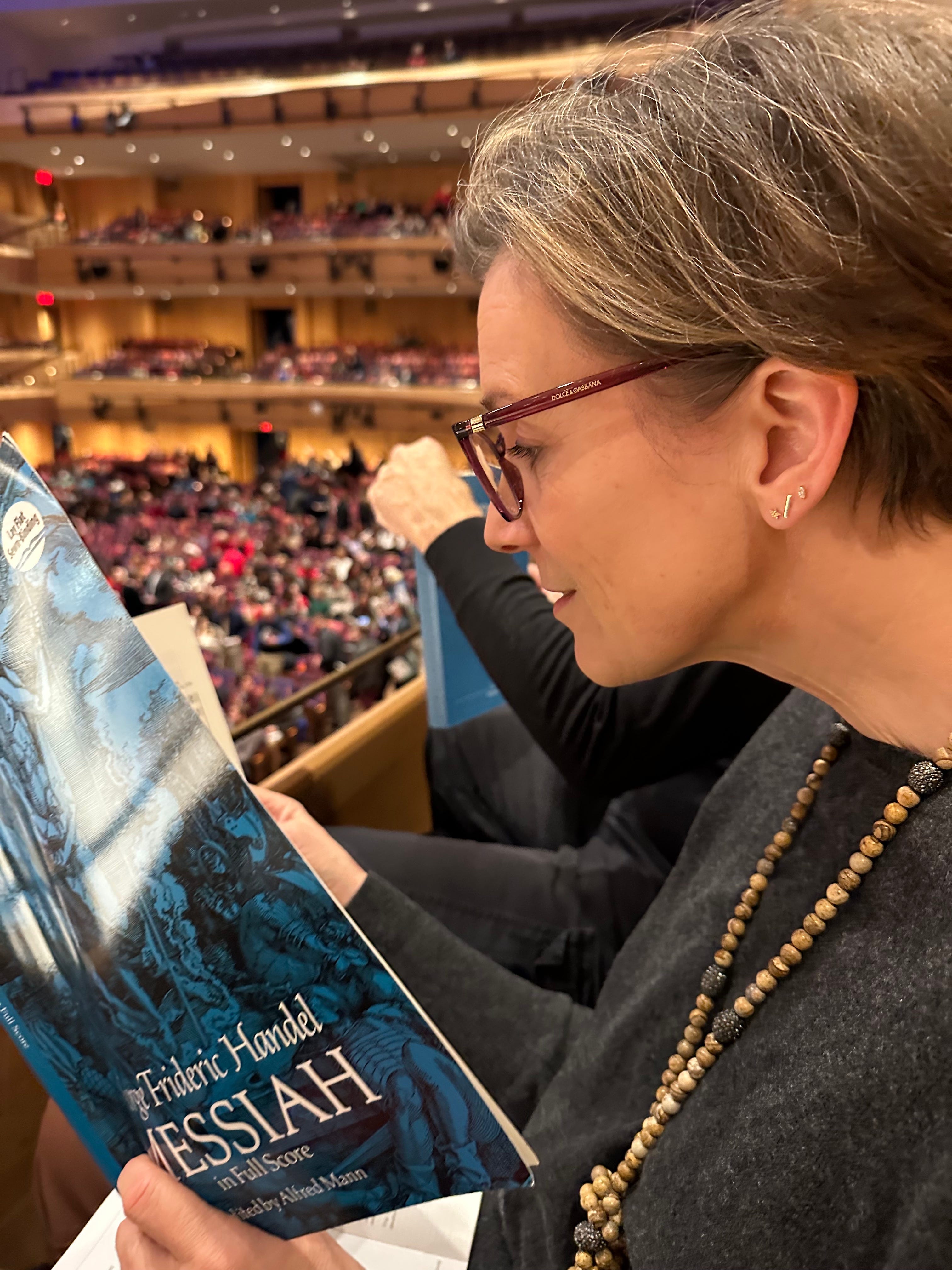
Halfway into my third set of lunges, the baby-faced trainer asked me if I had anything fun planned that evening.
“A concert,” I said, trying not to wobble as I transferred my weight to the ankle I broke last year.
“Nice,” he said. “And who are you seeing?”
“A performance of Handel’s ‘Messiah.’”
“Ah.” He paused, his expression blank. “What does she sing again?”
I needed that reality check. In my line of work, it’s easy to forget that during these holidays, “Messiah” is not actually as ubiquitous as Mariah. There was one December when I covered five performances in the space of two weeks for the New York Times. Other years I geeked out over the historical origins of the opening fanfare to “The Trumpet Shall Sound” or put musicians on the couch to analyze the various emotions Handel isolates and illuminates in his arias.
But until this week, I had never covered the oratorio from the perspective of one of the unrehearsed communal performances known variously as Scratch, DIY or Sing-Along “Messiah.” Performances like these, in which thousands of audience members make up the chorus, have a long tradition going back to the British Handel festivals of the 1820s, when people traveled from all over England to take part.
Ever in search for a fresh angle, I bought a score and signed up for the National Chorale’s “Messiah Sing-In” at Lincoln Center. (Keeping my prose fresh should be my next challenge: when I pulled up my past articles for these hyperlinks, I found I had used the word “glittering” in each one, like an heirloom ornament that always gets hung on the one bald spot on the tree.)
I have no choral experience, having studiously avoided singing as a child and throughout my music studies in college. But as a violinist, I know first-hand how much fun it is to sight-read music off the page. The other weekend I threw a chamber music party where we spread out in various formations throughout my home to read Mozart viola quintets, the Schubert cello quintet, a couple of Brahms sextets. I was on a buzz for days afterwards.
Even when you know a piece well as a listener, it feels a little like witchcraft to bring it alive in your own hands. This illusion of newness, even creation, is a by-product of the concentration required to read and execute all those notes - which is why amateurs may feel it most strongly. With the mind anchored in the present moment, any memory of performances or recordings fade until it seems like you’re unveiling a new work of art, one note at a time. It has become fashionable to criticize Western music notation as exclusive and inflexible, but it always amazes me just how much beauty and drama, gesture and sound can in fact be trapped in ink and paper and unlocked through nothing more than a bit of eye-to-muscle coordination.
Does sight-read music have the kind of polish we pay money for at the box office? Of course not. My article in the Times gives a taste of what went down at the “Messiah” Sing-In at Geffen Hall, which sometimes felt like a blend between a singing competition and SantaCon, punctuated by laughter, whoops and tons of applause. And yet the creative magic of on-sight music-making infects even observers. How else to explain the 380,000 views of a YouTube video of a 2012 scratch performance of Bach’s Christmas Oratorio by students in a two-bedroom apartment in Leipzig?
Here’s a description from the German newspaper Die Zeit about this impromptu concert, which has since spawned imitations in apartments from Dresden to Siegen and Vienna.
[Felix Pätzold, a 26-year-old music student,] bought eleven crates of beer, invited classmates and friends, organized sheet music and a pair of baroque kettledrums. The strings play by the windows, the continuo section and winds next to the radiator, three trumpeters and a timpanist in the next room; the singers stand crowded in the rest of the apartment, in the kitchen, in the bathroom, some 80 people in all. In the midst of them, Pätzold stands on an Ikea table and conducts.
[…] At 24.50 minutes into the video, after the final chord of “Ach mein herzliebes Jesulein,” the orchestra runs out of alcohol. The windows are fogged. “Beer chain!” shouts a tenor. From the hallway, full bottles are passed on and exchanged for empties. The heads of the trumpeters are glowing, condensation water runs down the windows. The singers fan themselves, they have red cheeks and sweaty hair. They look happy and a little drunk.
The comments section is full of testimonies by people who say watching the hourlong video has become a cherished holiday tradition despite its uneven intonation and Ikea-like sound quality. The mass appeal of these sight-reading parties must have something to do with our hunger for authentic experiences in these Instagram-filtered times. But DIY concerts also address a deeper human longing for re-enchantment. You can see it in the faces of these strangers in winter sweaters and jeans who have crowded together to rekindle a creative spark that was captured in ink hundreds of years earlier. For each participant, it’s a way to enter into a personal relationship with a famous masterpiece. But that relationship can only happen inside a community of fellow music lovers. And even just witnessing that collective effervescence turn into sound can be enough to bring, how shall I put it, a glitter of hope into our world.